Estimated reading time: 11 minutes
You want to write your family story, but you don’t know what to include, or whether it’s even possible.
There’s your side of the family: your grandparents lived on a small family farm in Virginia’s Shenandoah Valley, where you spent your summers. You remember your grandmother’s pride the day she hung the Century Farm sign. Her family had worked that land since 1902.
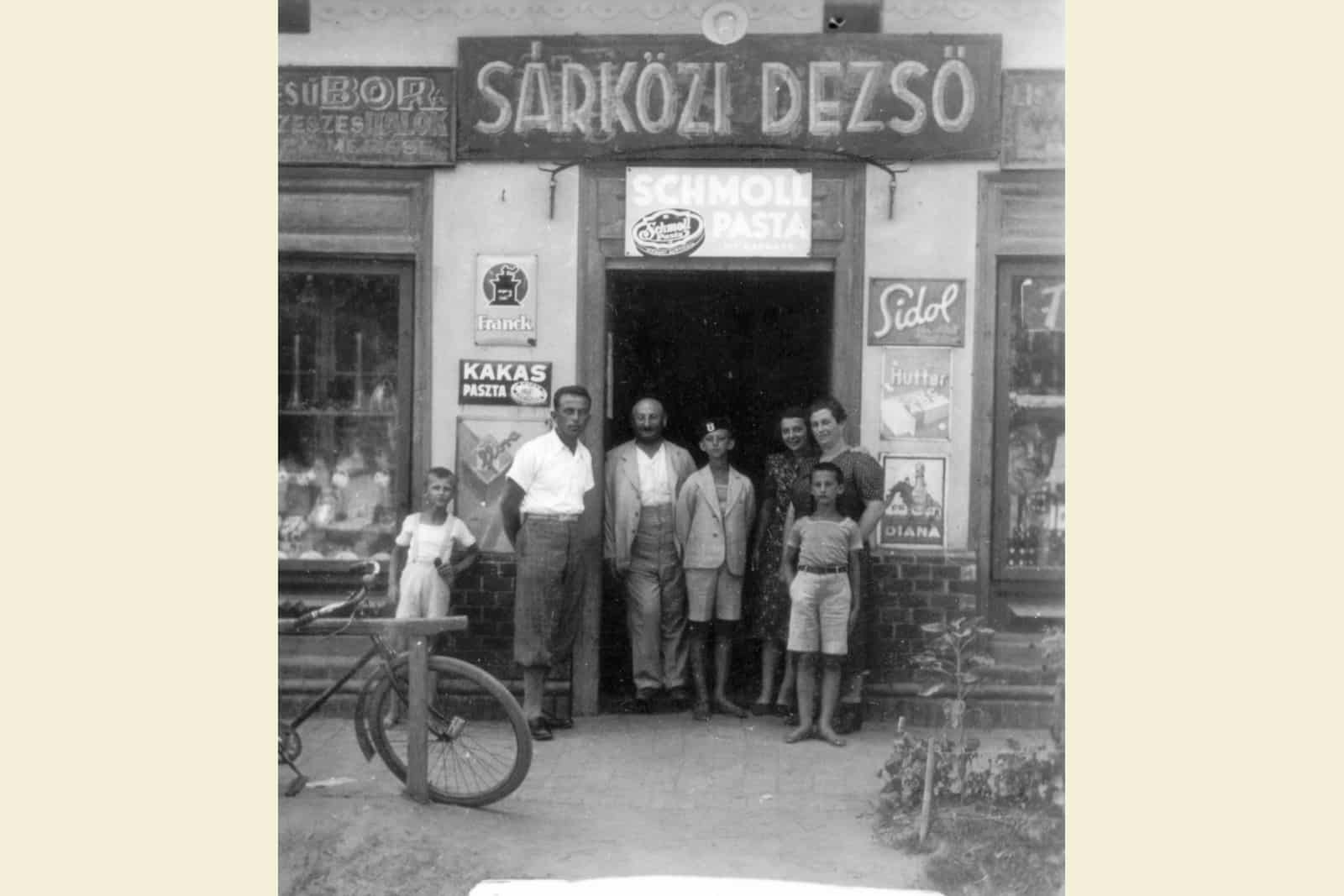
Then there’s your spouse’s side: your mother-in-law grew up on the Lower East Side, the daughter of a boxer. Your father-in-law survived the Holocaust in Hungary. When the Soviet tanks came in 1956, he escaped to Austria, swimming across a river one winter night with his clothes held above his head.
You want to do justice to their lives. But it feels like it would take years to write it all down.
Most family story writers I’ve worked with walk into our first session feeling exactly this way. Their story feels so big that they don’t know where to begin, and that feeling keeps them from writing anything at all.
Here’s how to decide what to include in your family story and write it one small piece at a time.
This series will help you get ready for your family story project using the Storykeeping® method.
A Simpler Way
Big Family Stories Are Made of Small Pieces
When I developed the Storykeeping method, I wanted people to be able to write their big family stories within the practical limits of their lives.
I noticed that when people talked about their family story in our first session, they told it in highlights: this happened, then this happened, and then this happened.
Each “this happened” was a piece of the story.
But then, when they wrote it down, they included a lot of filler text between the pieces. It seemed to be there only to connect everything into one continuous narrative. That filler was burdensome and time-consuming to write, and it didn’t add anything to the story.
So I set the parameters for writing each “this happened” at 1–2 pages, double-spaced, in 12-point type. The stories changed. People fleshed out each “this happened.” Each one became its own small, contained narrative that could be read aloud in two to four minutes. I called these pieces Slices. Here’s a Slice Allan Rayburn wrote about how his father got out of Germany in 1939, and one Virginia Fineberg wrote about going to her grandmother’s apartment in Buenos Aires.
Everyone in my workshops could write a Slice, no matter how much writing experience they had, even if English wasn’t their first language. I encouraged them to write it the way they’d tell it, using the words they’d actually say if they were telling it to me aloud.
As writers, they were no longer overwhelmed by the big story. They were engaged in writing each small piece. As a reader, I could hear their voices in their Slices, and what they wrote was interesting and meaningful.
Limiting yourself to a Slice is not only the best way to write a big story; it’s the best way to write an interesting one. A Slice also makes it much easier to know what to include. “What should I include in my family story?” is too big a question to answer. “What should I include in this one little piece?” is a question you can answer.
You don’t have to write the whole story. Just write one Slice.
The 4-Step Process
How to Decide What to Include
1. Know, Specifically, Why You’re Writing
Most people arrived in the workshop with a general sense of why they wanted to write their family story. They would say something along the lines of “because it’s important” or “I want my kids to know.” But they hadn’t taken the time to find the words to say, specifically, why it mattered to them.
So one of the first activities we did was put pen to paper and find out, and it turned out that people had a lot of specific reasons. Things like:
- I want my kids to know how my grandparents left Mississippi for Chicago during the Great Migration.
- I want to honor my mom because she raised us on her own after my parents divorced.
- I want to write about my grandfather, who was the first in our family to go to college thanks to the GI Bill.
- I want to write the story of how my grandmother started our family’s business.
- I want to write my mom’s story so my kids know about their Brazilian heritage.
- I want to capture my dad’s story of 9/11.
Your reasons may be: “I want my kids to know how our family held on to the farm for over 100 years.” Or “I feel responsible for preserving my father-in-law’s Holocaust story.” You might have multiple reasons and big stories to write about, especially if you want to write about your side of the family as well as your spouse’s.
Your why is your guide for every decision that follows. It points you to the person you’ll begin writing about and helps you identify all the little pieces of the story. Then, every time you sit down to write one bite-sized piece, you can read your why to remind yourself about what matters most.
It takes two minutes (literally) to find out why you are writing. Your reasons don’t have to be deep, lofty, or grand. In fact, simple and straightforward is best.
- Open your Family Story Notebook to a fresh page. At the top, write: Why do I want to write my family story?
- Set a timer for 2 minutes and jot down whatever comes to mind. Don’t censor yourself; let whatever is there land on the page.
- When time is up, read over what you wrote with an open, curious mind. Cross things out or jot additional notes.
- Circle the reason that matters most to you.
If you already did this when reading How to Find Time to Write Your Family Story, turn to that page in your Notebook, read over what you wrote, and add anything else that comes to mind.
2. Choose One Family Member to Focus On
Focusing on one person can feel stressful when your big family story includes more than one person you’d like to write about. In some cases, you can write about two family members at once because their lives are so intertwined. For example, if your parents grew up in the same community and got married young, it may be harder to tell their stories if you separate them. But for most people, it’s best to focus on one family member at a time.
That honors the individuality of their story and helps you stay clear. It also makes it easier to write the first story, and makes it more likely you’ll write the second (I’ve seen people do it).
Your why may already tell you who to write about, because you name that person in the primary why you circled in Step 1. But if your why points to more than one person, choose the person who feels easiest to write about. That might be due to your relationship with them, how much you know about their story, or how pressing their story feels right now. There is no wrong choice.
In our example, let’s say you circled “I feel responsible for preserving my father-in-law’s Holocaust story.” Your why names him, so you’ll start with your father-in-law.
3. Make Your “This Happened” List
Now you know why you’re writing and who you’re writing about. If you had to tell me about that person’s life in a minute or two, what would you say? This is your “this happened, then this happened” version of your story, and it shows you the pieces. Title a clean page in your Notebook “This Happened” and jot it down.
Use whatever shorthand phrases speak to you. For your father-in-law, you might write:
- born in Újkécske, Hungary
- his father owned a store
- growing up surrounded by 47 relatives
- riding in the packed railroad car
- he was on the train that didn’t go to Auschwitz
- only his immediate family of four survived
- Budapest and the 1956 Uprising
- swimming across the river to Austria
- arrival in the US
Your list is the first time you take the big story out of your head and put it onto the page. Now, instead of feeling like you have this big story to write, you start to see it in smaller parts.
When you sit down to write, you may find a piece just falls onto the page because you’ve heard it so many times. Other times, it can take some work. For example, if your father-in-law didn’t talk much about his past, his silence can go on your list, too. Sometimes writing about his silence is the place to begin.
You don’t have to know everything, and you don’t have to write the list in any particular order. Keep adding to your list as thoughts come to mind.
4. Choose What to Write About
Now you’re ready to decide what to write about. Read over your “This Happened” list with your why in mind. What feels easiest to write about?
As you read, you’ll notice that not every “this happened” on your list is the same size. Some are a Slice all by themselves, like the winter night he escaped, swimming across a river to Austria. And if you find that you can’t keep it to a page or two, it’s likely more than one Slice.
Other times, you know only a few small things that aren’t Slices on their own. But you might be able to combine them with something else on your list to create one. For example, if you combine “born in Újkécske, Hungary,” “his father owned a store,” and “growing up surrounded by 47 relatives,” you’ve got enough to write about his life before the war.
You don’t need to know a lot. Virginia heard just enough about her grandfather to write two pages that brought him to life for her children.
Once you start writing, more will come to mind. Read your why and ask: Does this help me tell this piece of the story? If it does, include it. If it doesn’t, add it to your list for another Slice.
That’s how you know what to include in your family story. Know why you’re writing, write one small piece at a time, and let the rest wait for another day.
Clarity about what matters provides clarity about what does not.
-Cal Newport, Deep Work: Rules for Focused Success in a Distracted World
What Supports Your Family Story Writing?
Knowing what to include is one of several small things that make family story writing easier.
You can set up a Family Story Notebook as a place to explore and craft your story. Here’s where you’ll write your reasons why and your “This Happened” list. You can add to them and return to them each time you sit down to write.
Many people find it easier to jot those first words down with pen and paper, which is why I suggest every family story writer give writing by hand a try. Having a designated writing spot and a writing ritual helps you arrive so you can make the most of the fifteen minutes you give to your family story writing project.
Ready to Begin? Pick an Entry Point
You know why you’re writing, who you’re writing about, and which piece of the story you’ll start with. Now let’s spend a few minutes writing. Our First-Timer Storykeeping Series gives you a small task and walks you through it step by step.
Since your “This Happened” list includes life events, try the EVENTS entry point. The EVENTS guide helps you capture the facts you know in one spot, and then write about one event. If you are writing about a parent, you may wish to start with the PLACES entry point. Or you can choose another entry point from the list below. As always, go with whatever feels easiest.
Frequently Asked Questions
FAQs
Include whatever helps you tell the specific family story you want to write. Start by knowing why you want to write it. Your why helps you decide who to write about. Then jot down a “This Happened” list of the pieces of their story that you know, and choose one to write about first. Write one small piece, or Slice, at a time. Bit by bit, your big family story will come together.
No. A Slice can be as short as a few paragraphs. One woman I worked with wrote her mother’s entire story in Slices under a page, some in just one paragraph. And it was beautiful. Write the amount that is right for you.
No. Each Slice captures one piece of the story, so you are free to write them in any order. This way, you can start with whatever feels easiest instead of getting stuck because you have to write in chronological order. Your Slices will eventually come together into a story. It’s better to figure out the order after you’ve finished writing them.
No. Sometimes you’ll realize that things on your list don’t really have a place in the story you wish to write. Other times you’ll discover that an item on your list is really just a sentence or two in one Slice. You don’t have to write everything. Capturing what matters most is how you write a big family story.
Photo credits: Justine Knight Photography.