Estimated reading time: 10 minutes
You want to write your family’s Holocaust history, but aren’t sure where to begin. Maybe no one ever told you that your parent or grandparent was a Holocaust survivor, but you always knew. It might have even felt like a secret. Your family didn’t talk much about the past, and now you wish you’d talked more.
Or maybe your survivor talked about the past, and the stories terrified you as a kid. Now, when you try to write them down, you can’t remember all the details. You’re frustrated that you didn’t get it all down sooner.
Go easy on yourself. This is a painful and complicated family history, and it’s not too late to write it down.
For more than a decade, I’ve helped children and grandchildren of survivors write their family’s Holocaust history. I’ve learned that you know more than you think. Let’s start with what you do know and how this history has lived in your life.
Part of our series for children and grandchildren of Holocaust survivors, designed to help you begin writing your family story using the Storykeeping® method.
Get Ready to Write
Capture First, Craft Your Story Second
A little about the two kinds of writing you’ll do in a family story project:
- Capture is writing down what you already know about your family, as well as your questions.
- Craft is using what you’ve captured to write words that become a story.
I’ll guide you to set up a place to capture and a place to craft below.
3 Reasons Why
Capturing Is the Best Place to Start
Writing your family’s Holocaust story can feel daunting. The history is distressing and at times horrifying to think about. And it’s even harder when antisemitism is on the rise and world events make you feel like it’s happening again.
So we are going to work on this story one small piece at a time, beginning by capturing what you know. Here are three reasons why.
1. You Find Out What You Know, and What You Don’t
You may feel like you know very little about your survivor’s prewar life. But when you take the time to write down what you know, you’ll likely find there are a few things you do know: their birthday, the country they came from, and their full name. You also might know a few personal details: their family observed Shabbat, their sisters went to university, they skied to school, or someone taught them to sew.
Having everything in one place helps you make connections. Perhaps you know the date they were taken from their home and realize that day was a Jewish holiday. You may remember celebrating their anniversary, which means you can add their wedding day to your timeline.
Even writing down your questions helps. Not only does it get them off your mind, but it also shows you what you most want to know.
2. You See Who to Ask and Where to Look
When everything you know and everything you wonder about is in one place, you’ve set the stage to find out more. Maybe you could call a sibling, cousin, or aunt and ask what they know.
I once worked with Susan, whose mom had Alzheimer’s disease and couldn’t answer any questions about her life. Susan felt so sad that she didn’t ask her mom more questions when she could. Still, I encouraged her to write down her questions, even though she doubted she’d ever find answers.
Not long after Susan wrote down her questions, she remembered Barbara, a former neighbor and also a survivor, who used to come over for coffee and long talks with her mom. Susan reached out, and it turned out Barbara knew a lot about her mom’s life. Susan also gained a new perspective on her mom as a young adult and the challenges she faced after the war.
Capturing can also make you take a second look at what you already have. For example, you might take out an old identity document and look closely at what information is there. Or study an old photo to observe the kinds of clothes they wore and the expressions on their faces.
3. You Give Your Family Roots
You may feel frustrated by how little you know about your family’s past. But when you capture the names, places, and dates you do know, you create a family history record you can share with your children and grandchildren.
It won’t have everything. But if you write down what you know about your survivor and yourself, your grandchildren will be connected to at least four generations of their family’s history. They will grow up with a feeling of rootedness that you didn’t have.
It often takes more than one generation to write a family’s Holocaust history.
Prewar, Wartime, Postwar
Start Your Family’s Holocaust History with the Postwar Era
There are three different eras in your family’s Holocaust history: prewar, wartime, and postwar. You likely know the most about the era after the war, because you were part of it.
You may already know that the story didn’t end with the war. It lived on in your parent’s kitchen, your grandmother’s apartment, and in your own life. Whether or not you consider yourself a second-generation or third-generation Holocaust survivor, this story has shaped who you are.
By the postwar era, I mean your survivor’s life after the war, which was essentially a second survival. Learning a new language. Making new friends. Finding a community. Growing a business. Creating a new home and the next generation, which includes you.
You may remember hearing their accent, going with them to their synagogue or their work, or eating a meal with them at the holiday table. Maybe you laughed at their jokes or marveled at their perseverance. You may have heard their nightmares or felt an uncomfortable silence.
If silence was how the past lived in your home, it may help to understand why. Here are 5 Reasons Why Holocaust Survivors Were Silent About the Past.
In this series, we’ll begin with the postwar years, capturing the fragments you know, and working our way back from there.
Before You Begin Writing
Capture and Craft: Set Up Two Places to Write
Before you can capture or craft, you’ll need a place for each. Let’s set them up in two steps.
Step 1: Set Up Your Home Base for Capturing
You’ll have one writing place for everything you know and wonder about your family’s Holocaust history. I call this your “Home Base” because it’s a place you can easily return to anytime you want to write something down.
I designed the Family Holocaust History Template as a printable PDF or a Google Sheets file, so setting up your Home Base is simple. Choose the version that suits you.
Option 1: Printable PDF Template
If you like something tangible and the slower, more reflective pace of writing by hand, you may prefer the printable PDF version of the Family Holocaust History Template.
- Download the printable PDF here. When you open the template, turn to the last page for directions.
Option 2: Google Sheets Template
If you’d like a Home Base on your computer that you can edit and share with your kids, you may prefer the Google Sheets version of the template. Once you make a copy, it’s private. It lives in your Google Drive account, and you control who has access.
💡 Quick Tip: You’ll need a free Google account to use Google Sheets. Here are setup directions and a short video that walks you through it.
- Open the Google Sheets template here.
- Click the blue Make a copy button to create your own private version in your Google account.
If you don’t see the blue button, or the sheet says View only, go to the menu and select File → Make a copy. On a phone or iPad, look in the three-dot menu. Here’s help from Google.
Your copy will open to a sheet called START HERE. At the bottom, you’ll see the tabs: NAMES, PLACES, OBJECTS, EVENTS, TIMELINE, QUESTIONS.
You don’t have to use the template. You can set up your Home Base anywhere that works for you. What matters is that you choose one spot and stick with it.
Step 2: Set Up Your Family Story Notebook for Crafting
Your Family Story Notebook is where you’ll write a few words about one thing you captured in your Home Base. It’s your private space to get messy and explore. Here’s How to Set Up Your Family Story Notebook.
When it comes to crafting, I suggest you begin writing by hand. Many people find it easier to get a few words down with a pen than with a keyboard. But if writing by hand isn’t for you, you can set up a Word or Google Doc to serve as your Notebook. Again, choose one spot and stick with it.
Your family’s Holocaust story can be very painful to write. Here’s how to be kind to yourself as you work on your project.
Let’s Write Your Family Story
Start With Your Questions
Your questions come from your own life, from having a Holocaust survivor in your family. Let’s capture some of them and write a few words about one.
Step 1: Capture Questions in Your Home Base (4 min)
Write in the QUESTIONS section of your Home Base.
- Set a timer: 3 minutes
- Write down: Any questions that come to mind about your survivor’s life.
- Review: 1 minute. Read your questions. Add any others that come to mind.
Done. Now you have a list of questions you can return to anytime.
💡Be Aware: As you go about your life, more questions may come to mind. When they do, add them to your list before you forget them.
Step 2: Jot About One Question in Your Family Story Notebook (4 min)
Choose one question that feels easy to explore today. Go to your Family Story Notebook and write “Questions” at the top of a clean page, then write the question you chose on the first line. Add it to your Contents page. Then use the prompt below to begin.
- Set a timer: 3 minutes
- Prompt: Why do I want to know the answer to this question?
- Jot down: Words or phrases about why this question matters to you. You aren’t trying to answer it. Just get whatever is in your mind onto the page, even if you go off-topic.
- It may not take the full time. Once you’ve written a few words and phrases, move on to Review.
- Review: 1 minute. Read what you wrote like a gentle, curious reader. What do you notice? Jot down a few more words. If a feeling comes up, name it.
🌟Optional: Repeat with another question.
Next Steps
What Feels Easiest?
Take a moment to notice what you’ve done. You’ve set up two places to write, captured your questions, and written your first words about your family’s Holocaust history. Choose whatever feels easiest to do next.
Stop Here for Today
If you are out of time or energy, stop and feel good that you’ve begun. Come back and continue another day.
See How Someone Else Began
Al Rayburn wrote about his father’s journey out of Nazi Germany and called the experience “one of the most important things I’ve done in my life.” Read Writing His Father’s Story Put His Life in Perspective.
Write Your First Short Story
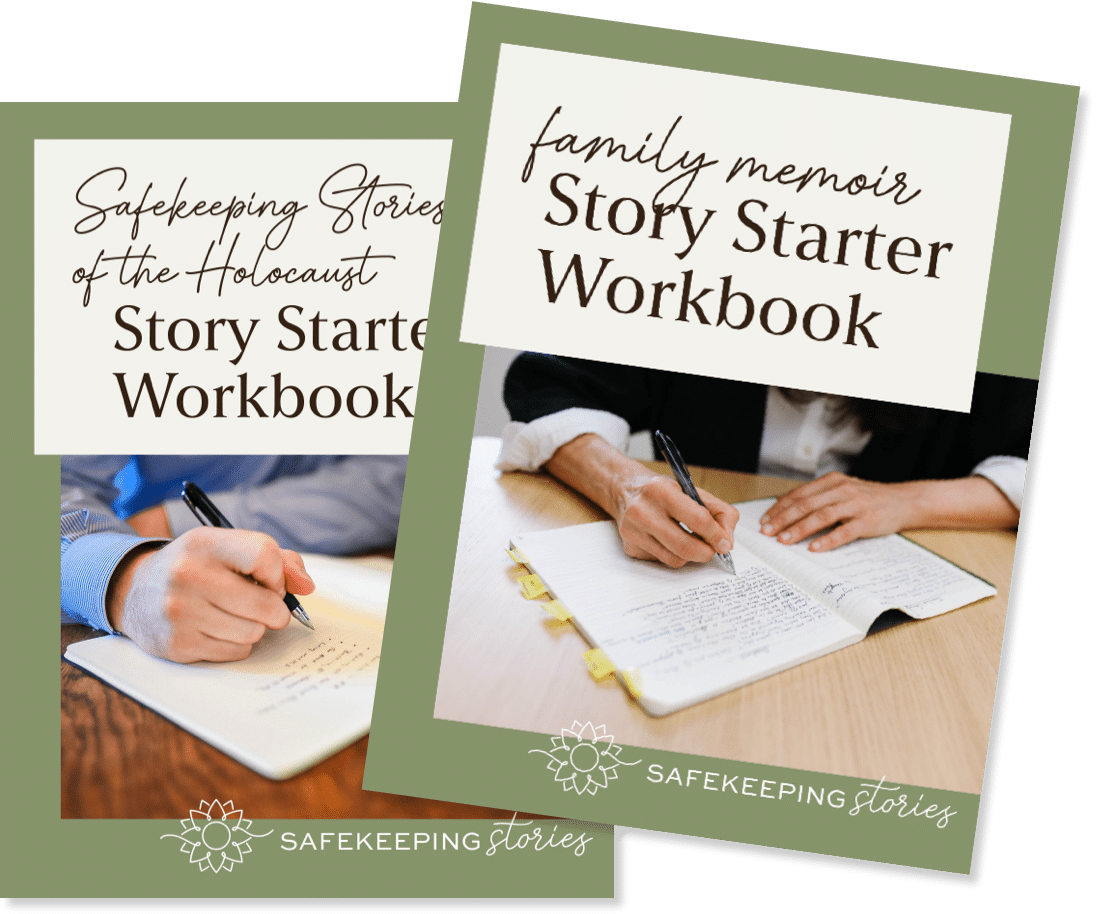
If you’d like to keep going, subscribe below to receive the Safekeeping Stories of the Holocaust Story Starter Workbook. It’s a simple guide to help you write your first short story about your survivor.
Frequently Asked Questions
FAQs
No. Start with what you already know. Research can come later, and what you capture first will show you what to look for.
Yes. The United States Holocaust Memorial Museum defines Holocaust survivors as including not only Jews who were in concentration camps, killing centers, ghettos, and prisons, but also those who fled, emigrated, or lived in hiding. It also includes people the Nazis classified as Jews even if they didn’t consider themselves Jewish. You may be the first in your family to use the word “survivor” to describe what happened to your parent or grandparent.
Yes. The template can help anyone who has a Holocaust survivor in their family write the family’s Holocaust history.
No. The PDF is designed to be printed and filled in by hand. If you’d rather type, use the Google Sheet.
Start with your questions, as in the activity above, and with your own memories of them after the war. Most people find they know more than they expected once they begin writing it down.
The template is your Home Base, where you capture what you know and your questions. The workbook guides you, step by step, to write your first short story about your survivor. You’ll receive it when you subscribe.
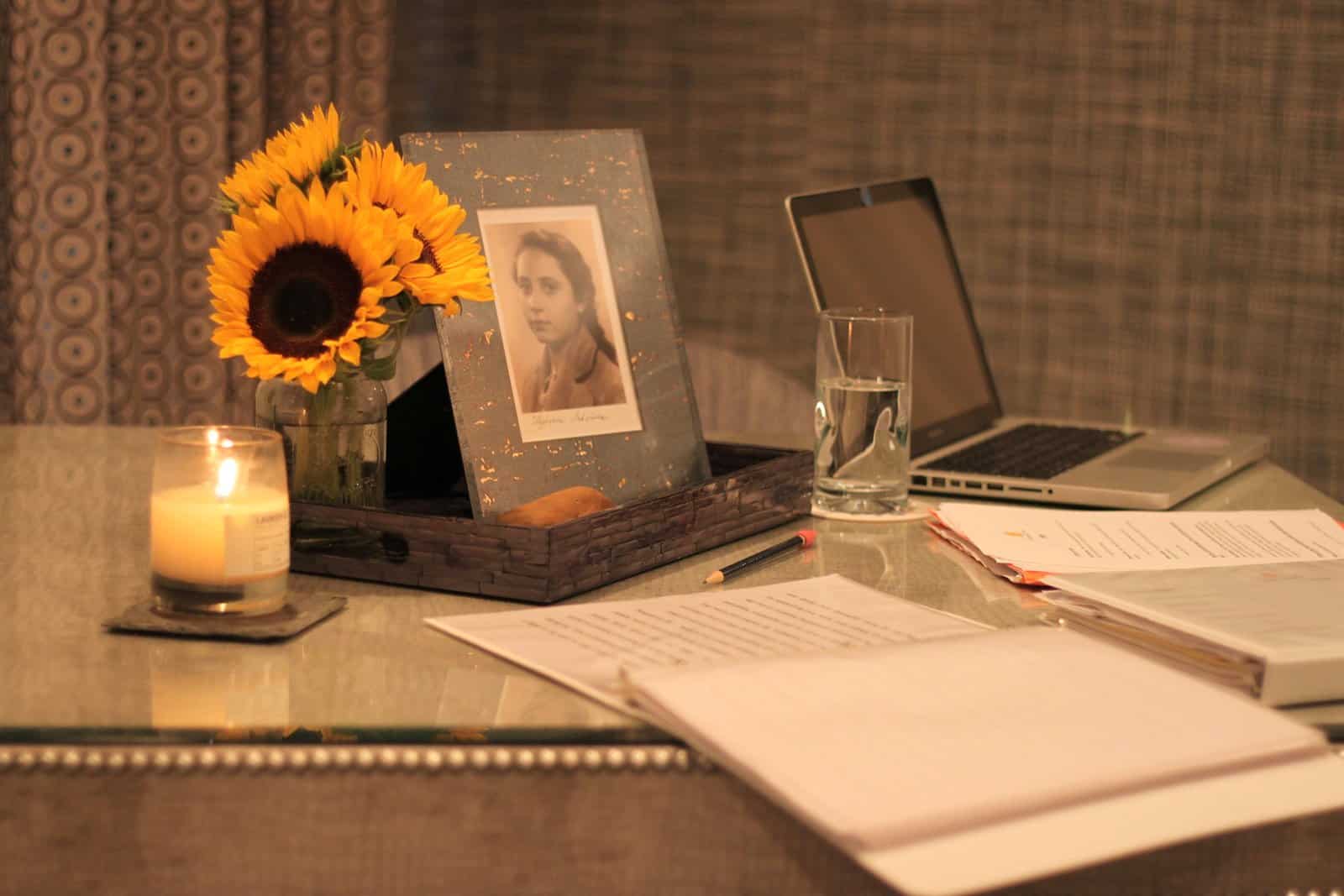
Photo courtesy of Ellen Kaidanow.